



When patients research hip replacement surgery in 2026, they encounter a rapidly expanding landscape of surgical options. Robotic assistance. Anterior approach. Same-day discharge. CT-based 3D planning. Each of these terms represents a genuine advance in orthopedic care, but what happens when you combine all of them?
The answer is robotic direct anterior total hip replacement: a procedure that integrates the muscle-sparing advantages of the anterior approach with the precision planning and real-time guidance of the Mako SmartRobotics™ system. It represents, in the view of many leading hip surgeons, the current apex of hip replacement technology. This post explains what robotic anterior hip replacement is, how the technology works, what the research actually shows, and whether you might be a candidate.
What Is Robotic Direct Anterior Hip Replacement?
This procedure combines two distinct innovations:
- The Direct Anterior Approach (DAA): The anterior approach accesses the hip joint from the front of the body, working through a natural interval between muscles rather than cutting through them. The major stabilizing muscles of the hip, the gluteus medius, gluteus minimus, and external rotators, remain entirely intact. The result is significantly less postoperative pain, faster ambulation, and a lower risk of dislocation compared to traditional posterior or lateral approaches.
- Mako SmartRobotics™: The Mako system is a robotic-arm-assisted surgical platform developed by Stryker that integrates CT-based 3D modeling, patient-specific preoperative planning, and intraoperative haptic (touch-feedback) guidance. It does not perform surgery autonomously, the surgeon remains fully in control at all times. What it does is give the surgeon a level of precision and real-time intraoperative data that is not achievable with manual techniques alone.
When combined, these two technologies address both the soft tissue trauma problem (which the anterior approach solves) and the implant positioning precision problem (which robotic assistance solves). Together, they cover the two most clinically significant variables in hip replacement outcomes.
How the Mako System Works: A Step-by-Step Overview
Understanding the technology helps patients appreciate what distinguishes this procedure from conventional surgery.
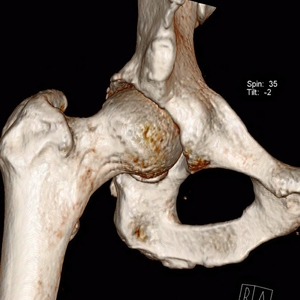
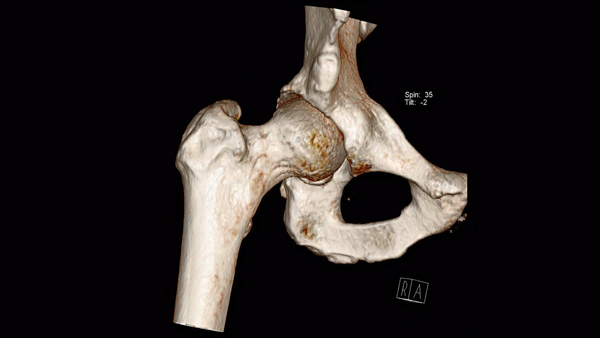
Step 1: Preoperative CT Scan and 3D Modeling: Before surgery, a CT scan of the patient's hip is obtained. The Mako system uses this scan to construct a precise, three-dimensional virtual model of that patient's unique anatomy, the exact shape of the acetabulum (socket), the femur, surrounding bone structures, and their spatial relationships.
Step 2: Patient-Specific Surgical Planning: Using the 3D model, the surgeon plans the exact size, orientation, and position of the acetabular cup and femoral stem before the patient enters the operating room. Implant sizing, inclination angle, anteversion, leg length restoration, and offset are all optimized digitally in advance. Every plan is individualized, there is no one-size-fits-all template.
Step 3: Intraoperative Guidance with AccuStop™ Haptic Technology: During surgery, the Mako system tracks the surgical instruments and the patient's anatomy in real time using infrared sensors. The robotic arm incorporates AccuStop™ haptic technology, a virtual boundary system that physically resists the surgeon's hand if the instrument deviates from the planned bone preparation zone. This ensures that reaming and implant placement remain precisely within the pre-planned parameters, even accounting for subtle intraoperative variables.
Step 4: Real-Time Soft Tissue Balancing: As the procedure progresses, the Mako system provides live data on leg length, offset, and joint stability, allowing the surgeon to make intraoperative adjustments and confirm that the reconstructed hip joint replicates the patient's natural biomechanics as closely as possible.
Step 5: Verification Before Closure: Before closing, the system allows the surgeon to verify final implant positioning against the preoperative plan. This confirmation step is not possible with conventional manual techniques.
What Does the Research Show in 2025 and 2026?
The evidence base for robotic-assisted anterior hip replacement has grown substantially over the past several years. Here is an honest summary of what the published literature currently supports:
Implant Positioning Accuracy Is Significantly Improved
This is the most consistently demonstrated advantage of robotic assistance. In one comparative study, 91.5% of acetabular cups placed with robotic assistance were positioned within the accepted safe zone, compared to 63.4% with conventional manual technique, a statistically significant difference.
Dislocation Rates Are Reduced
Component malpositioning is one of the primary drivers of hip dislocation after replacement. By improving cup placement accuracy, robotic assistance addresses this risk directly. Studies have shown that dislocation rates in Mako total hip replacement are significantly reduced compared to manual patients.
Functional Outcome Scores Favor Robotic Assistance
A May 2025 meta-analysis of 20 comparative studies found that Mako-assisted hip replacements resulted in higher postoperative functional scores, with the Forgotten Joint Score, a measure of how unaware patients are of their artificial joint in daily life, showing significantly greater improvement compared to conventional surgery, with a weighted mean difference of 8.7 points. A higher Forgotten Joint Score means the hip feels more natural in everyday movement.
Leg Length Consistency Is More Reliable
Leg length discrepancy after hip replacement, even minor amounts, is a common source of patient dissatisfaction, gait alteration, and secondary musculoskeletal problems. Robotic systems can assist in achieving more consistent leg length restoration, reducing discrepancies caused by uneven reaming or femoral component placement.
The advantages of robotic assistance are likely most significant over the longer term, through improved implant longevity driven by better positioning, rather than exclusively in the immediate postoperative period.
The RotexTable® by Condor: The Third Layer of Precision
Robotic direct anterior hip replacement at my practice incorporates a third technology that is often overlooked but operationally critical: the RotexTable® by Condor.
The anterior approach requires a specialized orthopedic table that allows precise, controlled positioning and movement of the operative leg throughout the procedure, particularly during femoral preparation, where the leg must be extended, externally rotated, and lowered below the level of the table in a controlled manner.
Drawing on over 5,000 anterior approach hip replacements, Dr. Davidovitch co-designed the RotexTable specifically to optimize this workflow. It is the only fully automated orthopedic table of its kind, controlled entirely by the operating surgeon without requiring an outside assistant to manually position the limb. This eliminates a source of variability that exists with conventional traction tables, where limb positioning depends on manual effort and can shift during the procedure.
When the RotexTable is used in combination with the Mako system, the result is a surgical environment where both soft tissue management and implant placement are as controlled and reproducible as current technology allows.
Robotic Anterior Hip Replacement vs. Conventional Anterior Hip Replacement: What Is the Difference?
Patients sometimes ask whether the addition of robotics makes a meaningful difference if the anterior approach is already being used. It is a fair question, and the answer requires nuance.
The anterior approach addresses the soft tissue problem, by not cutting muscles, it reduces pain, accelerates recovery, and lowers dislocation risk from the posterior capsule being intact.
Robotic assistance addresses the precision problem, by providing CT-based 3D planning and haptic guidance, it improves the accuracy of implant positioning beyond what the human eye and manual technique can reliably achieve, regardless of surgical approach.
These are two separate variables. A highly experienced anterior approach surgeon operating manually will achieve excellent results, the track record is well-established. The addition of robotics adds an additional layer of precision, particularly for implant positioning accuracy, that has measurable clinical consequences over time: reduced dislocation, better joint feel, and potentially longer implant life.
Who Is a Candidate for Robotic Anterior Hip Replacement?
Most patients who are appropriate candidates for total hip replacement are also appropriate candidates for the robotic anterior approach. Specific considerations include:
Strong Candidates
- Adults with hip osteoarthritis, avascular necrosis, or hip dysplasia causing significant pain and functional limitation that has not responded adequately to conservative management
- Patients who want the most precise implant placement currently available
- Active adults, including athletes, dancers, and professionals with physically demanding lifestyles, who want the fastest possible return to full function
- Patients with concerns about implant longevity, particularly younger patients who will place higher long-term demand on the joint
- Anyone for whom leg length symmetry is a high priority
Additional Considerations
- A preoperative CT scan is required for Mako planning, this is a standard, low-radiation study
- The procedure requires specialized equipment (Mako system and RotexTable) that is not universally available; access depends on the facility and the surgeon's training and certification with the system
- Patients with very unusual or complex femoral anatomy may require individualized assessment to determine whether the anterior approach is optimal
As with all hip replacement, a thorough consultation, including physical examination, X-rays, and discussion of goals and expectations, is the necessary starting point.
Frequently Asked Questions
Is robotic hip replacement performed by a robot?
No. The Mako system is a surgeon-guided robotic tool, not an autonomous surgical robot. The surgeon controls the robotic arm throughout the procedure. The system provides precision guidance, real-time data, and haptic boundaries, but every decision and every movement is made by the surgeon. Mako SmartRobotics™ does not move independently or make surgical decisions on its own.
Does robotic hip replacement hurt more than conventional hip replacement?
No. The robotic system is an intraoperative planning and guidance tool, it does not change what is done to the muscles and soft tissues, which is determined by the surgical approach. When paired with the anterior approach, patients experience the same reduced postoperative pain and faster recovery associated with muscle-sparing technique.
How long has robotic hip replacement been available?
Robotic-assisted joint replacement has been in clinical use for over a decade. The Mako system has been used in total hip replacement for many years, with a substantial and growing body of published clinical evidence supporting its outcomes. The combination with the anterior approach is more recent but now well-established in high-volume centers.
Is robotic hip replacement covered by insurance?
The underlying procedure, total hip replacement, is covered by Medicare and most major commercial insurance plans when medical necessity is established. The robotic assistance component is generally included within the surgical procedure billing and does not typically require separate authorization. Our team assists patients with insurance verification prior to any procedure.
Does robotic assistance mean a longer surgery
The Mako workflow adds a modest amount of time to the procedure, typically in the range of 10 to 20 minutes, due to the registration and verification steps involved. For most patients, this is an entirely acceptable tradeoff given the precision advantages the system provides.
Will I still be able to go home the same day with robotic anterior hip replacement
Yes, for appropriate candidates. Same-day discharge (outpatient) hip replacement is offered at Dr. Davidovitch’s practice for patients who meet the clinical criteria, regardless of whether robotic assistance is used. The Mako system does not alter the recovery trajectory in the immediate postoperative period, the anterior approach's muscle-sparing technique remains the primary driver of early recovery.
How do I know if my surgeon is trained and certified to use the Mako system?
Mako certification requires dedicated training, proctored cases, and ongoing case volume maintenance. It is appropriate to ask your surgeon directly about their Mako training, their certification status, and how many robotic hip replacements they have performed. Volume and experience with the system matter.
Why This Combination of Technologies Is Available in New York
Not every surgical center, and not every hip surgeon, offers the full combination of robotic direct anterior hip replacement using the Mako system and the RotexTable. Each element requires specialized training, institutional investment, and a surgical practice built around hip surgery as a primary focus.
Dr. Davidovitch’s practice at NYU Langone and OrthoManhattan is dedicated entirely to hip conditions. He was the first surgeon in New York City to perform the direct anterior approach to total hip replacement. He co-designed the RotexTable specifically to optimize that technique. And he has integrated Mako robotic assistance into his anterior approach practice to provide patients with the most precise, reproducible hip replacement outcomes currently achievable.
The outpatient joint replacement program he established at NYU Langone Orthopedic Hospital has now surpassed 1,000 outpatient joint replacements, a program built specifically on the premise that hip replacement, done right, should mean going home the same day with less pain and a faster return to life.
For patients in Manhattan, the outer boroughs, New Jersey, or traveling from out of state or internationally, this combination of experience, technology, and institutional infrastructure is available at a single practice.
Take the Next Step
If you are living with hip arthritis, chronic hip pain, or a condition that has been limiting your quality of life, a consultation is the appropriate place to begin. Understanding your surgical options, including whether robotic direct anterior hip replacement is right for your anatomy and goals, requires an in-person evaluation, not a web search alone.
To schedule a consultation with Dr. Roy I. Davidovitch, MD, contact our offices in Midtown Manhattan, New York or Englewood, New Jersey, or request an appointment online at anteriorapproachhipreplacementnyc.com.
Reference Links:
About Dr. Roy I. Davidovitch, MD
Dr. Roy I. Davidovitch is a world-renowned orthopedic surgeon based in New York City, recognized as a leading authority in hip reconstruction and preservation. As the Director of the NYU Langone Hip Center and the Julia Koch Associate Professor of Orthopedic Surgery, he has dedicated his career to advancing the field of minimally invasive surgery. He holds the distinction of being the first surgeon in New York City to perform the Direct Anterior Approach total hip replacement, a milestone that has redefined the standard of care for patients seeking rapid recovery and muscle-sparing techniques.
With a clinical track record that ranks among the best in the nation, Dr. Davidovitch has performed over 10,000 hip procedures, including more than 6,000 Direct Anterior total hip replacements and over 2,000 outpatient procedures. His commitment to patient safety is evidenced by a remarkably low complication profile, maintaining less than a 0.1% risk for both infection and dislocation. By combining academic leadership with high-volume surgical expertise, Dr. Davidovitch provides patients in Manhattan and Princeton, NJ, with a path to long-term pain relief and a swift return to an active lifestyle.