



When hip arthritis makes walking, exercising, or even sleeping painful, hip replacement can offer a path back to comfortable movement. But patients in New York City now have more choices than simply having a damaged joint replaced. Traditional techniques rely heavily on the surgeon’s experience and intraoperative judgment, while robotic-assisted surgery adds 3D planning and real-time guidance. So, when accuracy matters most, how do these approaches compare? Here is what patients should know.
What Is Traditional Hip Replacement?
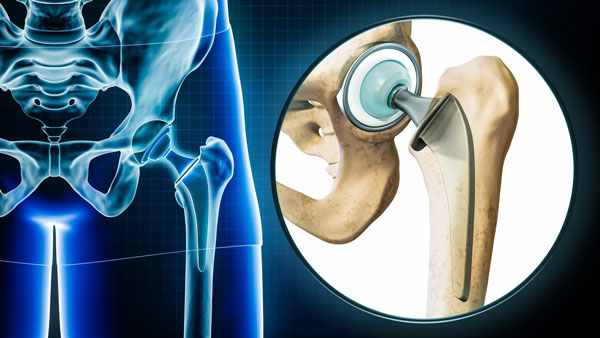
Traditional total hip replacement remains a highly successful procedure. During surgery, the damaged femoral head and arthritic socket are removed and replaced with artificial components. Implant size and positioning are determined using preoperative imaging, surgical measurements, anatomical landmarks, and the surgeon’s experience.
This approach does not mean surgery is imprecise. Experienced hip surgeons routinely achieve excellent implant positioning using conventional techniques. The surgeon maintains complete control throughout the operation and adjusts the procedure according to the patient's anatomy and surgical findings.
For patients considering hip replacement in New York, traditional surgery can remain an appropriate option depending on the severity of joint damage, anatomy, activity level, and overall health.
How Does Robotic Hip Replacement Improve Accuracy?
Robotic-assisted hip replacement adds another layer of planning and intraoperative guidance. Technologies such as Mako SmartRobotics™ use CT-based 3D planning to create a detailed model of the patient's anatomy before surgery. This allows the surgeon to plan implant size, orientation, and positioning based on the individual's anatomy.
Dr. Roy Davidovitch, a hip specialist serving patients in New York City, incorporates advanced technology such as robotic-assisted surgery and navigation into his hip replacement practice when appropriate. These tools are designed to support careful planning while keeping the surgeon in control of the procedure.
During surgery, robotic technology helps the surgeon follow the personalized plan and provides information about implant positioning and bone preparation. The robot does not independently perform the operation. The surgeon makes the surgical decisions and controls the procedure.
Robotic vs Traditional Hip Replacement: Which Is More Accurate?
When the comparison is specifically about implant positioning, robotic-assisted surgery can provide greater reproducibility and precision than conventional manual techniques. Patient-specific 3D planning allows the surgeon to establish a detailed surgical plan before the procedure begins.
Accuracy matters because implant positioning can influence hip stability, leg length, biomechanics, wear, and the risk of complications such as dislocation.
However, advanced technology does not automatically mean robotic surgery is necessary for every patient. The surgeon's experience, the patient's anatomy, implant selection, surgical approach, and preoperative planning all remain important factors.
For someone seeking a hip replacement surgeon in New York, the more useful question may be whether robotic assistance offers a meaningful advantage for their particular anatomy and treatment goals.
Does the Surgical Approach Matter Too?
Yes. Robotic technology and the surgical approach are separate considerations.
The direct anterior approach accesses the hip from the front through an interval between muscles. This approach can be combined with robotic assistance or computer navigation to help address implant positioning while using a minimally invasive surgical pathway.
Dr. Davidovitch has a specialized focus on hip surgery, including direct anterior total hip replacement, outpatient hip replacement, revision hip replacement, and hip preservation. His practice also offers anterior hip replacement with navigation, giving appropriately selected patients access to technology-assisted treatment options.
For New York City patients, choosing between surgical approaches should involve more than comparing technology. The surgeon should consider the patient's anatomy, diagnosis, previous procedures, activity level, and overall treatment goals.
What About Recovery and Long-Term Results?
Robotic assistance primarily addresses surgical planning and precision. It should not be considered a guarantee of faster recovery or a complication-free outcome.
Recovery depends on several factors, including the surgical approach, overall health, physical conditioning, pain management, rehabilitation, and the complexity of the procedure. Some appropriately selected patients may be candidates for outpatient or same-day hip replacement, while others may require a longer period of monitoring.
The goal is not simply to use the newest technology. It is to select the surgical strategy that provides safe, accurate, and durable joint reconstruction.
How Should New York Patients Choose?
If you are considering hip replacement in New York City, ask your surgeon how implant positioning will be planned, whether robotic or navigation technology is appropriate, which surgical approach is recommended, and how your individual anatomy affects the treatment plan.
For some patients, conventional hip replacement remains an excellent choice. For others, CT-based robotic planning may provide valuable additional precision. A consultation with a specialized hip surgeon such as Dr. Roy Davidovitch can help determine which approach is appropriate based on the individual's condition and goals.
Frequently Asked Questions
Is robotic hip replacement more accurate than traditional hip replacement?
Robotic-assisted surgery can improve the precision and reproducibility of implant positioning by combining patient-specific 3D planning with intraoperative guidance. However, accuracy and outcomes also depend on surgeon experience, surgical approach, patient anatomy, and other factors.
Does a robot perform the hip replacement surgery?
No. The surgeon performs and controls the operation. Robotic technology provides planning, tracking, and guidance, but it does not independently perform the hip replacement.
Is robotic hip replacement better than traditional hip replacement?
Not necessarily for every patient. Robotic surgery provides additional planning and positioning capabilities, while conventional hip replacement remains an effective treatment when appropriately performed. The best option depends on individual anatomy, diagnosis, and surgical goals.
Can robotic technology be used with anterior hip replacement?
Yes. Robotic-assisted technology can be combined with the direct anterior approach. This allows a surgeon to use the anterior surgical pathway while incorporating CT-based planning and technology-assisted implant positioning when appropriate.
What should I ask a hip surgeon before choosing robotic replacement?
Ask about the surgeon's experience with hip replacement, recommended surgical approach, implant positioning, whether robotic or navigation technology is suitable for your anatomy, expected recovery, and potential risks. Patients in New York City may also want to ask whether outpatient or same-day replacement is appropriate for them.
Find the Right Hip Replacement Approach for You
If you are considering hip replacement in New York, a detailed discussion of your symptoms, imaging, anatomy, and treatment goals can help determine whether traditional, robotic-assisted, navigated, or direct anterior hip replacement is the right option for you.
About: Roy I. Davidovitch, MD
Dr. Roy I. Davidovitch is a world-renowned orthopedic surgeon based in New York City, recognized as a leading authority in hip reconstruction and preservation. As the Director of the NYU Langone Hip Center and the Julia Koch Associate Professor of Orthopedic Surgery, he has dedicated his career to advancing the field of minimally invasive surgery. He holds the distinction of being the first surgeon in New York City to perform the Direct Anterior Approach total hip replacement, a milestone that has redefined the standard of care for patients seeking rapid recovery and muscle-sparing techniques.
With a clinical track record that ranks among the best in the nation, Dr. Davidovitch has performed over 10,000 hip procedures, including more than 6,000 Direct Anterior total hip replacements and over 2,000 outpatient procedures. His commitment to patient safety is evidenced by a remarkably low complication profile, maintaining less than a 0.1% risk for both infection and dislocation. By combining academic leadership with high-volume surgical expertise, Dr. Davidovitch provides patients in Manhattan and Princeton, NJ, with a path to long-term pain relief and a swift return to an active lifestyle.