



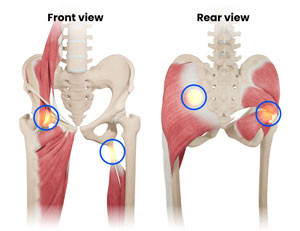
What Are Hip Tendon Injuries?
Hip tendon injuries involve damage or irritation to the tendons that attach muscles to bones around the hip joint. These injuries can range from inflammation (tendinitis) to partial or complete tendon tears. The most commonly affected tendons in the hip include the gluteal tendons, hip flexor tendons, and hamstring tendons. Hip tendon injuries can cause pain, weakness, and difficulty with movement, especially during activities like walking, climbing stairs, or standing from a seated position.
What Are the Causes of Hip Tendon Injuries?
Hip tendon injuries can occur due to acute trauma or develop gradually from overuse. Common causes include:
- Repetitive motion or overuse, especially in athletes and runners
- Sudden increase in physical activity without adequate conditioning
- Poor posture or body mechanics that strain hip muscles
- Direct trauma or falls that impact the hip
- Age-related degeneration of tendons over time
- Tight or weak hip muscles, which increase stress on the tendons
What Are the Symptoms of Hip Tendon Injuries?
Symptoms can vary depending on the severity and location of the injury. Common signs and symptoms include:
- Pain over the outer or front part of the hip
- Tenderness when pressing on the hip area
- Swelling or warmth around the injured tendon
- Weakness or instability in the hip or leg
- Pain that worsens with activity or prolonged sitting/standing
- Limited range of motion or stiffness in the hip joint
How Are Hip Tendon Injuries Diagnosed?
Diagnosis begins with a physical exam and a review of your symptoms and activity history. Your healthcare provider may perform specific movement tests to identify the affected tendon. Imaging studies, such as X-rays, ultrasound, or MRI scans, may be ordered to confirm the diagnosis, rule out other conditions, and assess the extent of the injury.
What Are the Treatment Options for Hip Tendon Injuries?
Treatment depends on the type and severity of the injury. Most hip tendon injuries can be managed with non-surgical methods, including:
- Rest and activity modification
- Ice and anti-inflammatory medications to reduce pain and swelling
- Physical therapy to improve strength, flexibility, and healing
- Corticosteroid injections to reduce inflammation
For severe or complete tendon tears, surgical repair may be recommended to restore hip function and prevent long-term complications.